
'For a man who had just received news of his daughter's kidnapping, he showed no sign of anxiety or agitation.' 'Here is a cool customer, I thought to myself.' 'The only thing he said was, 'I would not have been so anxious had they kidnapped my son'.' 'He told me that his daughter Rubaiya, who was a medical intern, was returning home from the hospital in a minibus when it was stopped close to the Mufti's house.' 'She was taken by four armed militants.' A gripping excerpt from Moosa Raza's Kashmir: Land Of Regrets.
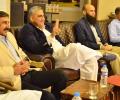
'Over the last year, Bajwa has created the environment to support bold moves on India. The ball is in India's court,' a senior Pakistan military officer tells Ajai Shukla.

'Is Rahul turning the Congress' covert soft-Hindutva support into overt support now?' 'And if so, following in the BJP's footsteps, is the Congress going to abandon Indian Muslims and Muslim causes altogether?' asks Dr Najid Hussain whose father-in-law former Congress MP Ehsan Jafri was killed during the Gujarat riots.
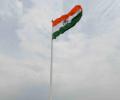
'The fabric of democracy is fraying,' says T V R Shenoy. 'It is being attacked not just by terrorists in Kashmir or by zealots in the North-East, but is being ripped apart even in Allahabad, in the Hindi heartland.'

'Kashmir is complex, conflicted and unpredictable.' 'Take the instance of Handwara and the killings there.' 'The need of the hour is more one of restraint in the violent reactions of the armed forces.' 'But restraint is wanting in Kashmir for a quarter of a century now.'
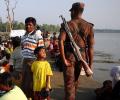
Resettlement of refugees elsewhere is not the morally correct solution to the problem for it lets the perpetrators off the hook.

He said 90 IS sympathisers had been arrested across the country.

'The strategy has to be restoring order in one part and countering the very effective propaganda through a very nimble monitoring and response system,' says Lieutenant General Syed Ata Hasnain, who retired as the General Officer Commanding of the Srinagar-based 15 Corps.

'Is Trump going to play a mediating role? Can he play a mediating role? It's out of the question.' 'Kashmir is an Indian responsibility.'

'J&K continues to have the highest concentration of military personnel anywhere in the world and the alienation of the Kashmiri has increased in the last ten years than ever before.'

'Our policy seems to be to give away part of J&K, even though we are entitled to the entire state.' 'The Congress has done so, and the BJP is following the same policy.' 'No one is applying their mind to the legal position.' 'Kashmir is not a part of Pakistan under its own constitution.'

Sofia Ashraf's video 'Kodaikanal Won't,' slamming Hindustan Unilever for alleged 'mercury poisoning,' has gone viral with over 25,000 online petitioners demanding that the multinational clean up the mess as well as compensate those who worked at its thermometer factory in Kodaikanal.

How to deal with a country that has made export of terror a reason to make the world notice and fund it? Rediff.com contributor Sanjeev Nayyar offers a few suggestions

The question really is whether the US can be persuaded to embark on a path of calibrated and stronger sanctions on Pakistan.

Mohammad Sajjad profiles Professor Riazur Rahman Sherwani, 94, versatile mind, intrepid intellectual.

Pakistan's new Army Chief has begun setting the stage to act against groups like LeT and JeM
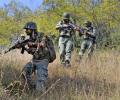
'The surgical strikes were not meant to deter or stop infiltration.' 'It was meant to create a kind of uncertainty in the minds of Pakistani military commanders.' 'By using hard power we've created an option which was not there earlier.'

'If JNU students are anti-national, why do we send in the police? Why not send in intellectuals like M V Kamath to have a debate and discussion?'

Sanjeev Nayyar suggests 16 measures by which we can tackle our unrelenting and untrustworthy neighbour.

David Coleman Headley pens down his life as a terrorist and his turn towards extremism in his new memoir.

MUST READ: The speech Nayantara Sahgal was not allowed to give.
'The attack on the Pathankot base constituted an act of war. Yet Modi's only public comment up until now on that attack has been to blame it on "enemies of humanity".' 'Modi came to power talking tough about Pakistan. But in office, he has pursued a Pakistan policy that has lost both direction and purpose,' argues Brahma Chellaney.

'Muslims are depressed and disillusioned.' 'The safety valve is that we still have a multicultural mosaic in West Bengal, Tamil Nadu, Karnataka and Kerala.'
'Despite Modi's high-flown rhetoric about good-neighbourly relationships in South Asia, he lacks a road map how to proceed -- be it with Bangladesh or with Sri Lanka and Pakistan... But a deeper question arises here: Did he duck on his own accord or under the diktat from the RSS, asks Ambassador M K Bhadrakumar.

'We will have to wait till the snows melt in June/July 2016 before we can get a clearer idea of whether Pakistan intends to get serious about ending support for cross-border terrorism,' says G Parthasarathy, India's former high commissioner to Pakistan.

Banning beef (and not cow) slaughter, not renewing education quota for Muslims. What next from the Devendra Fadnavis government in Maharashtra, a ban on azaan, asks Syed Firdaus Ashraf.
.jpg)
The Indian Army must be given a free hand to retaliate punitively at one or more places of its choosing on the LoC. The aim should be to cause maximum damage to the forward posts of the Pakistan army, particularly those through which recent attacks have been launched, thereby raising the cost for the army, says Gurmeet Kanwal.
The 1965 war teaches us that war by escalation is a real possibility. Despite clear threats, Pakistan never believed that India will ever cross the international border. In the age of nuclear deterrence, this failure to deter Pakistan is the central lesson of 1965, says Colonel Anil Athale (retd).

To persist with talks in the face of continuing terrorism that puts hundreds of Indian lives at stake is not only naive but morally repugnant and ethically unacceptable. It is time to see through this charade and abandon a path of high risk and no returns, says Vivek Gumaste.

'How does one get to weaken all those pillars on which the Deep State of Pakistan and the Separatists rely to prevent the situation reaching that point; how must this stage of the proxy war be countered? In many ways the strategy being followed by the adversaries is a smart one, acting within threshold and avoiding overpitch,' says Lieutenant General Syed Ata Hasnain (retd).
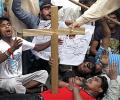
Two suicide bombers rammed into the All Saints Church in the Kohati Gate area of Peshawar, Pakistan, when Prime Minister Nawaz Sharif was on his way to New York to attend the United Nations General Assembly session.

'India was in no position to wage another war in 1965, having suffered a morale-shattering defeat in 1962. The three services were in the middle of a modernisation and expansion phase and therefore not fully trained or battle-ready.'
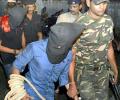
'Counter terrorism does not appear to be good guys fighting the bad ones; it is about people being picked up, detained and charged with crimes they did not commit.'

'Manto is the only writer to grasp what the project of Pakistan would eventually mean,' says Aakar Patel, who has translated a collection of Saadat Hasan Manto's essays in a just-released book Why I Write.

'It was a mission undertaken in darkness in every sense -- literally, because Afghanistan had no electricity at that time; and, metaphorically because Delhi historically dealt only with the Pashtuns of Afghanistan and the foreign ministry's vast archives had nothing to offer on the culture and politics of the northern tribes in the Hindu Kush.'
 © 2026 Rediff.com - Advertise with us - Disclaimer - Privacy Policy - Sitemap - Feedback - About us - Terms of use - Grievances